Market Views
Leadership Interview | The Fundamentals of Navigating Market Change
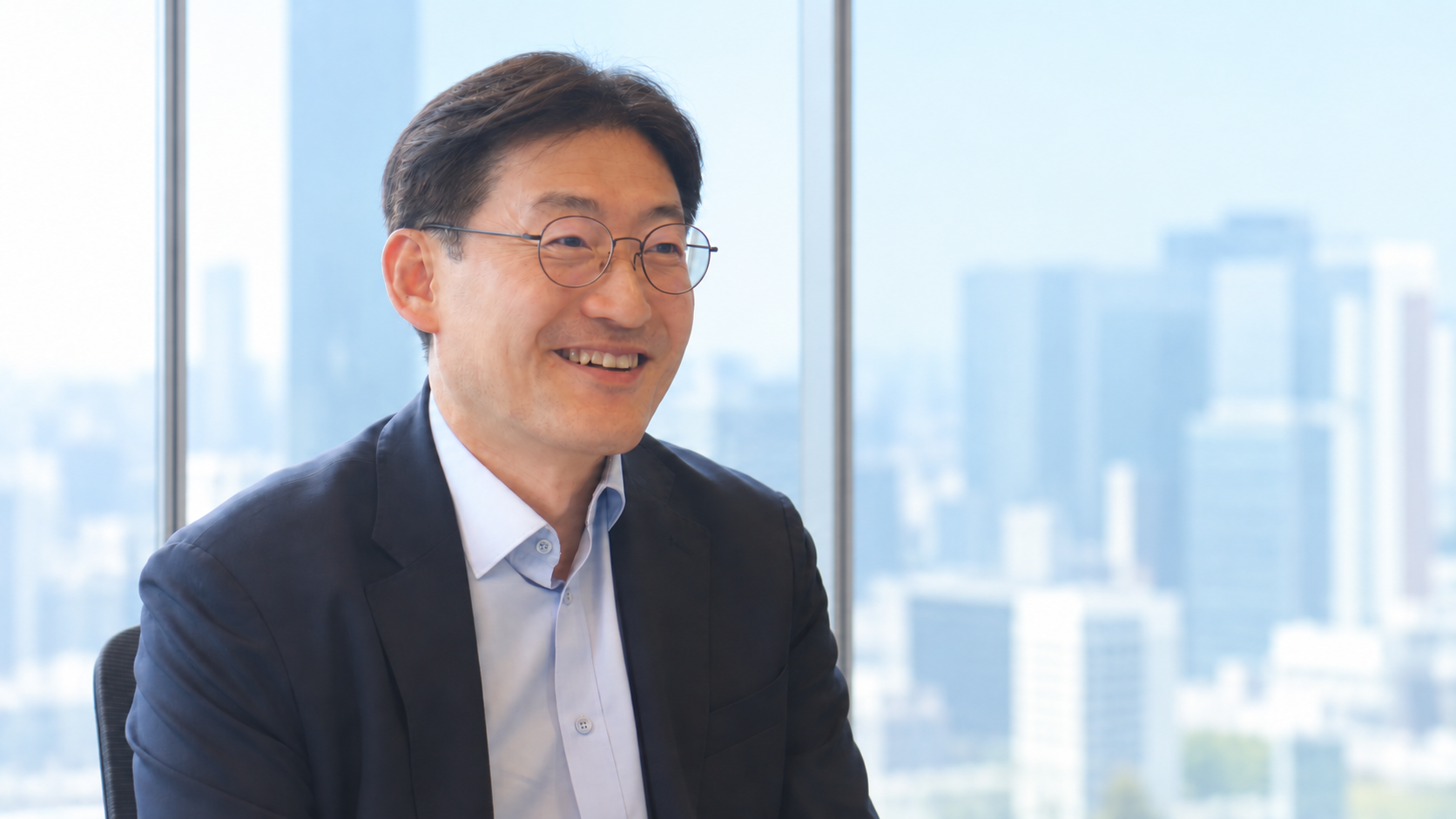
“The more challenging the environment, the more important it is to stay focused on the fundamentals.” This principle underpins IGIS Asset Management CEO Seokwoo Jung’s view of the market and approach to investing. For Jung, the fundamentals mean understanding the intrinsic value of real estate, reading the flow of capital, and fulfilling an asset manager’s responsibilities to investors throughout the investment and asset management process. Building on these fundamentals, IGIS takes an integrated view of real estate and capital structures, works to enhance the competitiveness of assets in line with evolving industry demand, and continues to explore new investment opportunities. We spoke with Jung about why, in times of greater change, a sharper focus on the fundamentals becomes all the more important. Q. You were appointed CEO earlier this year, at a time when both the market and the company were undergoing significant change. What have been your main priorities since taking the role? Becoming CEO has brought greater responsibility, but I do not believe the fundamental nature of my role has changed. When both the market and the organization are going through periods of change, uncertainty can weigh heavily on investors and employees alike. It is therefore important to communicate openly with investors, address concerns and misunderstandings, and create an environment in which employees can remain focused on their core responsibilities. At times like these, I believe it is even more important to stay focused on the fundamentals. For an asset manager, that means understanding the intrinsic value of real estate, identifying where capital is flowing, investing according to clear principles, and managing investors’ capital responsibly. Our priority is to continue doing what we are supposed to do, without being distracted by short-term market conditions. Q. This year, IGIS completed several notable transactions and projects, including the sale of Arenas Yeongjong and the completion of the Goyang Samsong Data Center. As CEO, what role have you considered most important? This year, we completed the sale of Arenas Yeongjong, bringing a seven-year logistics development project to a close, and also completed the Goyang Samsong Data Center. We made meaningful progress in other areas as well, including being named preferred bidder for The K Twin Towers and completing the transaction for Doosan Tower. These results were made possible by employees across the company applying their expertise in a challenging market environment. I see the role of the CEO not as being involved in every detail of individual transactions, but as setting the broader direction of the company. My responsibility is to assess whether each investment is aligned with that direction and to provide the judgment and guidance needed along the way. This is also why I do not view the company’s achievements as the result of any one individual. Q. What do you see as the key variables shaping the commercial real estate market, and how is IGIS responding? Interest rates, raw material costs and geopolitical uncertainty remain key variables affecting development and financing costs. Because rents cannot immediately absorb all of these increases, new development and transaction activity are likely to remain selective for some time. That does not mean, however, that the fundamentals of all assets have weakened to the same degree. In offices, tenant demand varies depending on location, supply conditions and asset quality. In data centers, competitiveness depends on factors such as power availability, location and the underlying demand base. Rather than looking only at the direction of the broader market, it is increasingly important to assess the actual demand for each asset together with its capital structure. The ability to anticipate refinancing and exit options based on fund and debt maturities has also become more important. Recognizing the growing need for more systematic management of asset-level borrowing and refinancing, IGIS established its Loan Finance Center in 2021. The center works closely with asset management teams to review financing structures and refinancing conditions well ahead of maturity and to prepare appropriate responses. I believe an asset manager’s capabilities are demonstrated by how quickly it can assess unexpected changes and develop effective solutions. Q. Capital has increasingly been concentrating in prime and core assets. How is IGIS responding to this trend? Capital, both in Korea and globally, is increasingly concentrating in high-quality assets. IGIS is pursuing a dual strategy: securing prime and core assets while also repositioning large-scale assets whose value has yet to be fully realized, adapting them to new sources of demand and enhancing their competitiveness. In simple terms, it is about making prime assets “even more prime.” This can include converting existing retail assets into offices or other uses, or reconfiguring space within a building to meet changing demand. The key is not simply to acquire an asset, but to understand its location, physical structure and the demand generated by surrounding industries, and then translate that potential into tangible value. Even assets that have lost competitiveness in their original use can regain relevance when connected to new sources of demand. Q. As the AI era gathers pace, the role of real estate is also expected to evolve. How do you think AI and automation will change the way companies select real estate? Rather than changing the use of real estate overnight, I believe AI is changing the criteria companies use to select assets. In the past, companies choosing office space tended to focus primarily on location and floor area. Increasingly, they are also considering infrastructure that can support an AI-enabled working environment, including power capacity, cooling performance and dedicated server space. The same applies to logistics facilities. As robotics, automation systems and fulfillment operations become more widespread, sufficient power capacity and the ability to expand facilities are becoming more important. Tenants no longer expect to use the same space in the same way indefinitely. They increasingly want facilities that can be expanded and upgraded as their businesses grow. These changes need to be reflected in how investment assets are selected. Q. What experience has IGIS accumulated through data center development, and how does that inform your investment strategy going forward? Since launching the Hanam Data Center project in 2019, IGIS has built experience across the full value chain, from site acquisition and permitting to development, leasing, operations and exit. As this was our first such project, each stage involved significant challenges. By working through these issues one by one with partners including LG CNS, we built capabilities that later carried over into the Goyang Samsong Data Center. Going forward, we need to move beyond developing and selling individual data centers. Just as logistics networks consist of hub centers, regional centers and urban last-mile facilities serving different roles, data centers can also be differentiated by function. Large-scale core data centers can handle intensive computing and storage, colocation facilities can serve regional demand, edge data centers can provide low-latency processing, and backup facilities can enhance resilience. Together, these assets can form an integrated network. We are therefore looking at data centers not simply as a series of individual transactions, but as an interconnected network and portfolio. As the importance of producing and consuming power locally increases, the role of regions outside the Seoul metropolitan area is also likely to grow. We are examining investment opportunities with a view to what function each asset can serve within a broader portfolio and how those assets can generate synergies with one another. Q. Beyond offices and data centers, what sectors are you watching over the longer term? With the transition to a super-aged society and growing interest in health, we are paying close attention to life sciences, including healthcare and biotechnology. Companies in these sectors require substantial upfront investment in laboratories, production facilities and specialized infrastructure. For growth-stage companies, tying up large amounts of capital in real estate for extended periods can be a significant constraint. Asset managers can help address this issue by connecting long-term investors with businesses. Companies can focus their resources on technology, talent and their core industries, while long-term investors can gain access to quality real estate and growing businesses through appropriately structured investments. We are also exploring opportunities in infrastructure related to climate change, including renewable power generation and energy storage, both in Korea and overseas. Q. Looking ahead, what is your long-term vision for IGIS, both as CEO and on a personal level? I would like IGIS Asset Management to become more than a company that simply invests well and generates returns. I want us to be a company that transforms underutilized or obsolete spaces into places where new industries can take root. I also hope we can build a reputation for solving complex problems that others have struggled to address. As CEO, and as a senior member of IGIS, I want to help build that kind of company together with the next generation of our people. Interview Compiled and Edited by Soyeong Park, Brand Communications Manager ──────────── - This content has been prepared for informational purposes only and is not intended to serve as a basis for investment decision-making by users. It is not created for the purpose of promoting, soliciting, or recommending financial investment products, providing investment advice, or making stock recommendations. The company makes no express or implied representations or warranties regarding the accuracy or completeness of any materials or information provided in this content. Furthermore, the company assumes no responsibility or liability for any damages or losses incurred because of investment decisions made based on this content. Potential investors shall not raise any objections in this regard. - The above information is based on data as of September 2026 and has been prepared in compliance with applicable laws and internal control standards. The materials and information in this content are subject to change due to changes in market conditions, the stock market, interest rates, inflation, tax policies, and other social, economic, or policy-related factors. Additional risks may arise from asset price fluctuations, exchange rate volatility, credit rating downgrades, declines in real estate prices, investment performance results, or unforeseen natural disasters such as fires, floods, or pandemics. Consequently, financial (investment) products may result in partial or total loss of the principal investment, with such losses being borne by the investor. These products are not protected by the Korea Deposit Insurance Corporation under the Depositor Protection Act. Past performance does not guarantee future returns, and the results may differ from the performance at the time of content creation or in the future. Additional transaction and other costs may also apply. - This content has not been legally submitted or registered, nor has it been approved under any applicable law. It may contain subjective opinions that do not necessarily represent the official views or statements of the company. This content is not intended to solicit, offer, or recommend the subscription, purchase, or sale of securities. Investors have the right to receive sufficient explanations from financial product sellers in accordance with applicable laws. All investment decisions should be made carefully and solely on the information provided in the securities registration statement, (preliminary) investment prospectus, and terms and conditions. Investors should make prudent decisions based on their own judgment. [IGIS Asset Management Co., Ltd. Compliance Officer Review No. 900-26-AD-098 (September 10, 2026 – September 9, 2027)
26. 09. 15